


For more details on the Gentle Tawashi of Palm, click here

The MakerTakada Kozo Shoten

- Around 1930, Daisuke Takada's great-grandfather, Kaname, began processing palm products at home. In 1948, after the war, his grandfather Kozo founded Takada Kozo Shoten and started manufacturing palm tawashi. In 1970, his father Hideo took over as president. Daisuke joined the family business in the early 2000s, and in 2008, Hideo established Kozo Co., Ltd. Currently, Daisuke leads the production of various palm products. *The formal notation of "高" is "髙" (hashigotaka), but common kanji is used in the article. takada1948.jp/
TOPICS 01A relationship that began by chance with KAMA-ASA
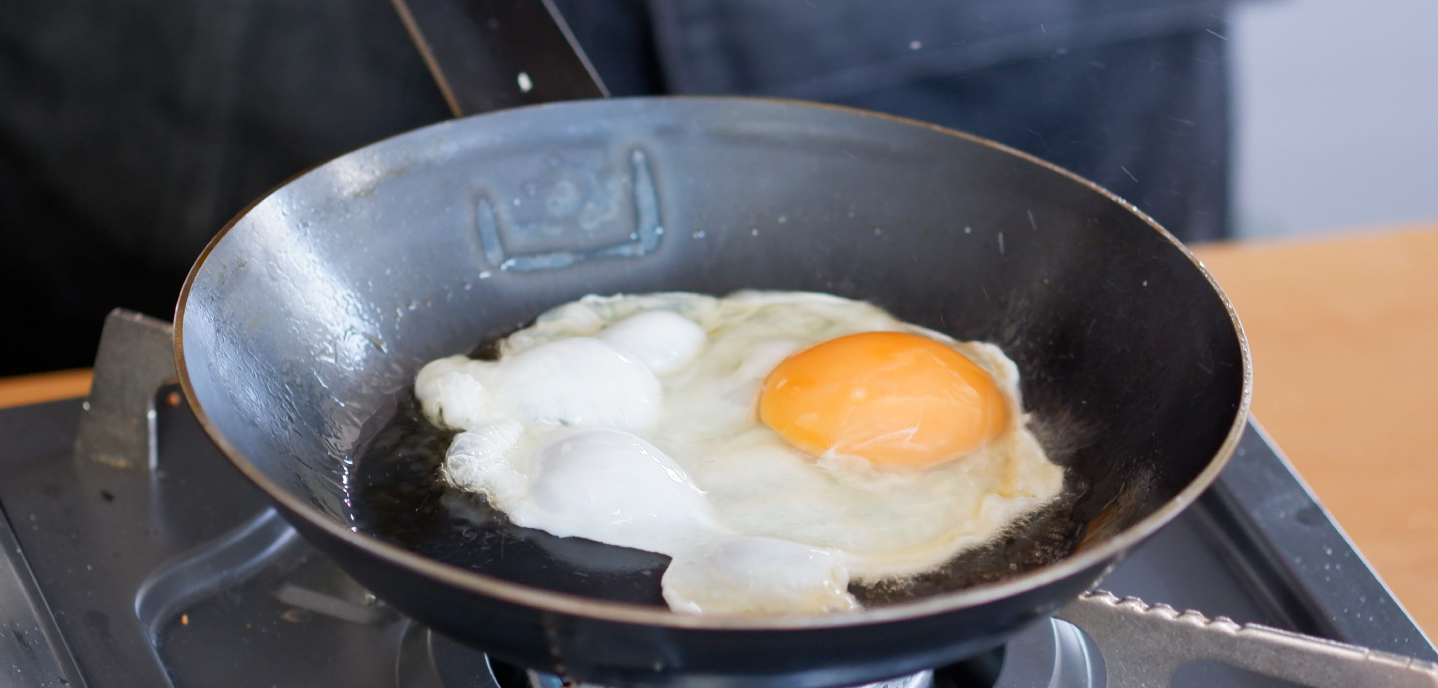
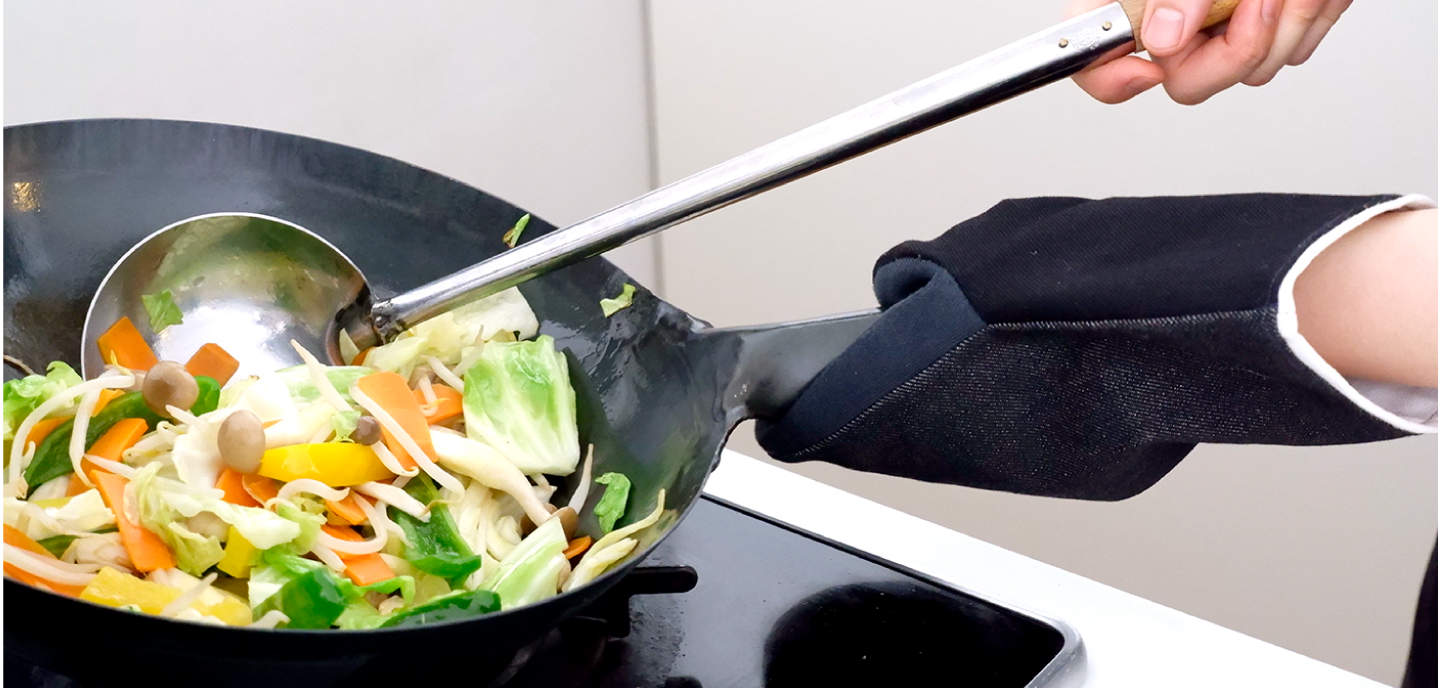
The palm tawashi is perfect for washing items like iron frying pans and Chinese woks, where you want to avoid using detergent. It is resilient, gentle, and effectively scrapes off dirt. Its soft texture prevents scratches, making it ideal for washing dishes. Additionally, its heat resistance allows for hot water disinfection, keeping it clean. Takada Kozo Shoten, based in Kainan City, Wakayama Prefecture, has been producing such tawashi and other palm products for a long time. Each tawashi is crafted by artisans and is loved in both households and professional settings.

The "Gentle Tawashi of Palm" is soft, resilient, and feels good to hold. It does not damage materials, making it suitable for a wide range of uses from iron and wood to glass and ceramics.
At KAMA-ASA, Takada Kozo Shoten's tawashi is a consistent bestseller. Our relationship began in 2011. Daisuke Takada, who initially had no intention of taking over the family business and pursued a career in cooking, returned to his hometown and began helping his father Hideo after working in a restaurant in his mid-20s. Initially, he had no intention of succeeding his father, but after seeing how often clients would say, "It's great that your son has come back," he gradually solidified his decision. During this time, Daisuke visited KAMA-ASA while on a business trip to Tokyo, just after it had been renovated.

At Kozo Co., Ltd. in Kainan City. Behind them is a wide range of products from Takada Kozo Shoten.
Daisuke Takada
I saw that you had renovated in a magazine, so I went to check it out. A friend of mine was opening a restaurant in my hometown, and I thought about giving him a knife as a gift. At that time, KAMA-ASA was handling tawashi from another manufacturer, and I had no intention of trying to push my own products, so to avoid any awkwardness, I sent my business luggage back to Wakayama before going. It was my first time visiting Kappa-bashi.
Wada
That's right, the Sky Tree wasn't completed yet. It opened in May 2012.
Daisuke Takada
Exactly. The reason I wanted to work at the base of the Sky Tree was that at the time, we were selling "the most expensive tawashi in Japan" (laughs), and we had connections to high places in Wakayama and Osaka, like buildings and events at Tsutenkaku. Still, Kappa-bashi had a completely different atmosphere from Osaka's tool street, and I was surprised. When I visited KAMA-ASA and was looking at knives, they asked me, "What kind of cooking do you do?"
Wada
Oh, I see. Did they notice your hand movements when you held the knife and ask you that?
Daisuke Takada
It seems so. When I said, "I actually quit that job," they asked, "What are you doing now?" I replied, "Actually, I'm in the tawashi business." They then asked, "Is it palm?" At that time, no one ever asked if it was palm when I went on sales calls. I thought, "Is there a type of tawashi? Do you need different shapes? If you're washing dishes, you have sponges, right?" I didn't think it would go as far as palm. But when they asked, "Is it palm?" I thought I should hide the fact that I was in the tawashi business, but it came out anyway (laughs).

Palm material waiting to become a product. Different thicknesses and hardness of fibers are used to create various items.

The state of cut palm that has been rolled up.
Wada
At that time, I was really looking for it. As you mentioned, palm tawashi existed. It was around the time when iron frying pans were starting to sell well, and it was already established that "tawashi is used to wash iron frying pans." However, our president also went to Kyoto to ask for palm tawashi to be wholesaled, but it felt different. Then, a tawashi maker came along (laughs).
Daisuke Takada
That's right, and they said, "I'll go get the president!" But as I mentioned earlier, I wasn't thinking about selling anything, and I had already sent my luggage back, so I think President Kumazawa was confused. The only original product I had was a "tawashi strap" (laughs). But I got excited and ended up forgetting to buy a knife, saying, "I'll send it right back when I get home!" (laughs).
Wada
I still remember the day Daisuke sent me the tawashi. There were manufacturers that handled palm tawashi, but theirs were around 400 yen at the time. However, the tawashi Daisuke sent was about 700 yen, and then there was a Kishu palm tawashi for about 3000 yen. Honestly, I thought, "What? 700 yen for a tawashi?" But after discussing it with our president and others, we decided, "This is going to work!" and started handling it. We also held an exhibition, right?
TOPICS 02Establishing a position as a supporting player with frying pans, pots, and cutting boards.

Scenes from the "Japanese Tawashi - The Charm of Palm We Want to Share" exhibition held at KAMA-ASA in December 2012. In addition to products from Takada Kozo Shoten, machines for tawashi making were also displayed.
Daisuke Takada
That's right. When I went, they were having an exhibition by Eight Branding Design in the second-floor gallery. The president and Wada asked me, "Would you like to hold an exhibition?" But I had never done anything like that, so I went back to Wakayama to consult with my friends. They thought it was interesting. However, we had no funds, so we rented a truck and drove it ourselves, staying at a cheap hotel in Ueno (laughs).
Wada
The exhibition was introduced in the newspaper and was very successful. We extended it from 7 days to about 10 days. The president (Hideo) also demonstrated tawashi rolling.

During the "Japanese Tawashi" exhibition, there was also a demonstration of tawashi making by President Hideo Takada.

The actual Kishu palm also appeared at the "Japanese Tawashi" exhibition.
Daisuke Takada
That's right. After doing it for 10 days, I returned to Wakayama and then came back to pick up the truck. At that time, I stayed at my usual business hotel where I could see the Sky Tree with the staff I brought along to help with the cleanup (laughs). It brings back memories. But it's surprising that not long after I wanted to work at the base of the Sky Tree, I was holding an exhibition in a gallery where I could see the Sky Tree. What did we start with?
Wada
The "Gentle Tawashi for Daikon," the "Gentle Tawashi for Tableware," and the "Gentle Tawashi for Heels." Initially, we sold them under those names, but I asked to change it to "Gentle Tawashi of Palm Small" because I thought customers would have fixed ideas about what they were for. We also had a smaller Kishu palm tawashi and a fern tawashi, which I requested to be made. At first, we only handled about five types.

The matching sweatshirts feature illustrations of Takada Kozo Shoten's representative products.
Daisuke Takada
We often get asked, "What is this tawashi used for?" So we gave them distinctive names to show that they can be used for various purposes.
Wada
That said, as I mentioned earlier, I initially thought the price would be a challenge. Tawashi can be found at 100 yen shops, and they are generally perceived as cheap, but Takada's tawashi is quite expensive. However, when we explain the product to customers and let them touch it, they are convinced and make a purchase. We have especially started recommending it alongside frying pans.
Daisuke Takada
There wasn't a strong start, but about six months in, sales began to increase steadily, going from 10 to 20, then 100, and 200.
Wada
Initially, they were sold in plastic packaging. However, during a festival, we removed all the packaging and put them in a large container with price tags, and customers started touching and buying them. The appeal of tawashi lies in the feel, size, and usability when washing, so letting customers touch them is the best approach. From there, I asked Daisuke to provide them without packaging.

Daisuke Takada
That's right. But such things can only be done at KAMA-ASA. Since tawashi can shed powder or fibers, if we don't keep them in bags, it could inconvenience other products when displayed in stores. We also want to include contact information in case something happens... However, Wada said, "This is fine as it is." After that, the number of sales increased dramatically.
Wada
Takada's tawashi is a great supporting player.
Daisuke Takada
We realized that this was our strength. Previously, we thought of tawashi as a main player alongside items like ohitsu and frying pans, but at one point, we realized that "if frying pans don't sell, tawashi won't sell." I wondered why we were able to get along with people like Himenosaku's Himenosuke. Then I thought, "Oh, they're not in the same industry!"

The manufacturing scene of "Gentle Tawashi of Palm Sasara," which is useful for washing iron frying pans.
Wada
Like Himenosuke's pots, good tools are not cheap. Because we want to use them carefully, we also need suitable maintenance tools. Since I can confidently recommend Takada's tawashi, our staff also started recommending it. Tawashi sells alongside pots and frying pans. Tawashi also works wonders on wooden products like ohitsu. As a result, more customers started coming in just to buy tawashi. They say, "I liked it after using it, so I want more."
Daisuke Takada
Pots and frying pans are not consumables, but tawashi is.
Wada
That's right. Also, the word "vegetable" resonates with everyone. Many people say, "Won't tawashi scratch the frying pan?" I then ask, "You wash vegetables with tawashi, right? Which is harder, the tawashi or the vegetables?"
TOPICS 03The "Gentle Tawashi of Palm Musubi," which won a Good Design Award.

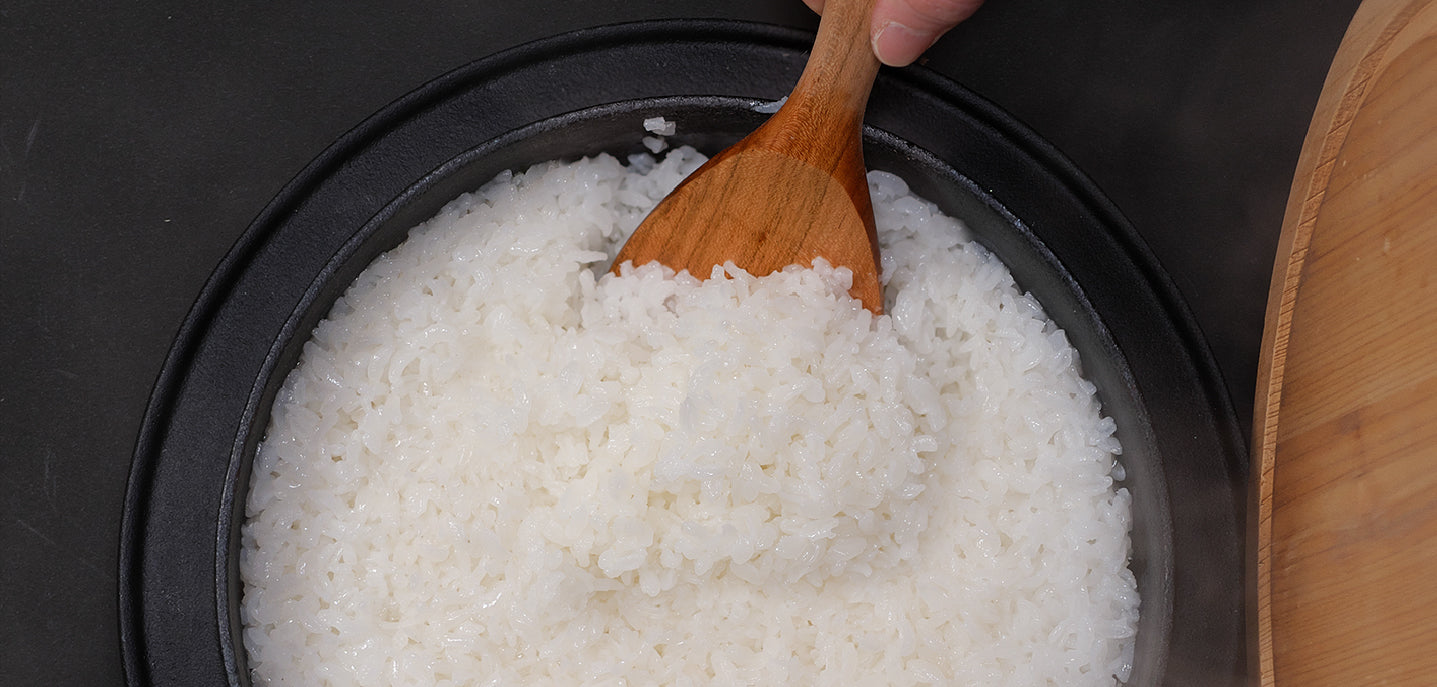
The "Gentle Tawashi of Palm Musubi" was created at the request of KAMA-ASA while developing the "KAMA-ASA Rice Pot." It is a size that fits in your hand and is easy to wash inside the pot.
Wada
The "Gentle Tawashi of Palm Musubi" is a product we developed together. When we were developing our rice pot, we were applying a coating inside the iron pot, but using a regular tawashi would scratch the fasteners, causing them to peel off. So, I asked Daisuke to remove the fasteners.
Daisuke Takada
As long as the fasteners are not exposed, it should be fine, right? We already had a tawashi called "Gentle Tawashi of Palm Twisted," which also had no exposed fasteners, so I brought that along. But Wada said, "What I want is a bit different from this..." We spent about a year going back and forth on it.
Wada
The rice pot itself is an iconic product for KAMA-ASA, and we were developing it as a key product, so we really wanted dedicated maintenance tools for it.
Daisuke Takada
It took a long time to get the OK, so when "Musubi" was finally completed, I thought, if this doesn't work, I'll just give up. In fact, this was based on a tawashi that my father had made for fun, which was a ring-shaped tawashi linked like a chain, created during a time when tawashi wasn't selling at all, and he said, "This is for preventing dementia!" I thought, "This hides the fasteners," but Wada's request was to keep it under 1000 yen. This would make it 1500 yen because it would require two tawashi worth of materials, and when I mentioned that, Wada casually said, "That's fine."
Wada
That's right, that's right.

The description panel for "Gentle Tawashi of Palm Musubi." It is useful not only for rice pots but also for washing dishes and vegetables.

Palm cut for "Gentle Tawashi of Palm Musubi," waiting to be rolled.
Daisuke Takada
What I remember is that Wada, who had been pondering, exclaimed, "Wow, this feels great!" the moment he used it. This tawashi has a wider contact area with the pot compared to the "Twisted" version. The feeling of "great" comes from the palm fibers making solid contact with the pot's surface, creating a pleasant resistance that can be felt in the hand. Chefs often say, "It feels like the tawashi sticks to the cutting board," and it's the same sensation.
Wada
The appearance made me think, "Ah!" but when I used it, the fit was incredible. So we decided to commercialize it! Then we thought, "What should we name it?"
Daisuke Takada
I had tentatively named it "Chain." But my mother said, "That's not very creative. How about 'Musubi'?" To me, it didn't seem like it was tied together. But my mother must have had that image pop into her head. In the end, I’m glad we adopted that name.
Wada
This was also submitted for the 2020 Good Design Award.
Mr. Takada
It was right in the middle of the pandemic, but Wada said, "We submitted our rice cooking pot. Here are the application documents, so why not give it a try?" I thought there was no way we could win a Good Design Award just by changing the shape of a tawashi, especially since there were already products that had won the Long Life Design Award. But since Wada said that, I decided to submit it, and we ended up winning. Thanks to that, the "Musubi" tawashi we have at KAMA-ASA is selling really well, with about 3,500 units sold last year. Isn't that amazing? That means KAMA-ASA sells about 10 Musubi tawashis a day.

For both KAMA-ASA and Wada, Mr. Takada is a reliable presence that shows them a new world.
TOPICS 04A specialized team centered around family that produces a variety of items.
Wada
That's impressive. By the way, you have an incredible variety of products like tawashi and brooms at Takada's place. What would you say is the most niche item?
Mr. Takada
We really have a lot, but there are items for grooming racehorses, washing one-sho bottles for sake shops, washing soba steamer baskets, and even though it's not for washing, we made drumsticks for sasara. There are many items like straw cleaners and glue brushes, but most of them are niche.
Wada
So, those are made based on customer requests, right?
Mr. Takada
That's right. However, requests from retailers are still quite few... When my brother goes to department store events, or when we get inquiries via email, we often hear directly from customers saying, "I want something like this." Those customers usually show us the tools they are currently using or send them to us, explaining what their dissatisfaction is, so the conversation goes pretty quickly. We hold a mandatory meeting every day from 11:30 to 12:00 to discuss those requests. Actually, 30 minutes is not enough to finish everything, but we make it a daily routine to discuss various things.

Holding the palm fiber material. The imported palm fiber used in most products is stronger than domestic ones.

Wrapping evenly arranged palm fibers with wire. Each one is handmade.
Wada
How many people do you have working with you now, Mr. Takada?
Mr. Takada
Including my family, there are 10 of us. My parents, my brother, my wife and I, and then 5 others are fully operational. My parents are getting older, so I think we need to improve things. Hiring people is really difficult. I love making things, but I can't wrap tawashi. My brother is good at it though.
Wada
How long have you been working with your brother? How is it working with a sibling?
Mr. Takada
My brother Naoki joined this work right after graduating from university, and we've been working together for about 12 or 13 years. Some people say it's impossible to work with siblings, but I'm totally fine even if we share a hotel room on business trips. I don't know how my brother feels about it (laughs). But everyone seems to find my brother adorable. Our staff also asks me, "When is Naoki coming back from his business trip?" or "Where is he going next?" I'm envious. He is also working hard on Instagram. When my brother goes to regional events, about 60% of the customers say they found us through Instagram. It seems like there are a lot more young people now.

Making the "Gentle Tawashi". It cleans without damaging the floor.

Carefully packing palm fiber tightly and wrapping it beautifully. No one has yet reached the level of the representative.
Wada
How old is the representative now? You look quite young.
Mr. Takada
I think I'm 69. But the number of items I can produce will gradually decrease, right? It's difficult. I want to hire people, but it's really hard to find people in our industry. Even if they come, they often quit before they can learn to wrap tawashi. We don't intend to expand the size of our company. Rather, we want to focus on making good products. I think it's enough if it reaches only the customers who truly understand us.
Wada
Do you still find it difficult to sell tawashi sometimes?
Mr. Takada
Yes, I do. Tawashi is a product that requires a lot of effort. So, I tell customers to do as they please. I often get asked about how to dry them, so I added a hanging string, but nowadays, there’s no place to hang them in kitchens. So, it's fine to just toss them into the sink basket! People say, "What about bacteria...?" but sponges are the same, right? The best way is to use them constantly morning, noon, and night, and rinse them under running water. Those who say tawashi gets slimy probably only use it occasionally.
Wada
Taking care of tawashi is a common question, right? Like, what should I do if rice grains stick to it?

Mr. Takada
We quickly disinfect tawashi by pouring hot water over them. Regarding rice grains, I usually get asked about that in workshops. I used to explain how to remove them, but ultimately, the fact that rice grains stick to tawashi is already a problem, right? Recently, I’ve been saying, "If my kids leave rice grains, I get angry."
Wada
By the way, you publish a free paper called "Gentle Tawashi Communication," right? You can read it on paper and also on Instagram, and it's really amazing. The content is interesting, but the illustrations are done by a professional. Who draws them?

Miko Umanao, who handles the "Gentle Tawashi Communication" alone. She not only introduces Takada Kozo Shoten's products but also writes columns about seasonal living.
Mr. Takada
This is our staff, Miko Umanao. The main feature is "This Month's Deep Dive!" where she organizes the story of one product. She's from Kyushu and seems to love tools. She used to work in the food industry but would come to department store events in between. After running into her several times by chance, when my brother asked her, "What are you doing lately?" she said, "I'm working part-time," so we pulled her in. Then she said, "I want more people to know the charm of our products. Can I write a newspaper?" But she is completely self-taught in drawing. We also use her illustrations in our catalog. Overseas customers can understand the illustrations, right?

The illustrations in the catalog are also done by Miko. They are clear and beautiful.
Wada
I see!
Mr. Takada
At first, this was A3 size! But she writes this after finishing her evening job, so she ended up being chased by newspaper deadlines. So, we all asked her to make it A4 size, and that's how it became the current format. But everyone feels our uniqueness in this, and we get asked, "When is the next issue?" so I'm happy about that.

The palm tree that appeared in the "Japanese Tawashi" exhibition. The fibers used for tawashi and other products come from the peeled skin.

The scene of peeling palm fibers in the palm forest in Kainan City. Mr. Takada also works in the mountains while learning from his master, but he says it's a tough job. Image provided by Takada Kozo Shoten.
Wada
Mr. Takada is also working on the regeneration of the Kishu palm forest and has many connections beyond tawashi. For example, thanks to him, we can now handle Kishu Binchotan charcoal. I think Wakayama has a much longer history than Tokyo and is a place full of charm. I learn a lot from Mr. Takada.
Mr. Takada
We are also allowed to do various things that can only be done at KAMA-ASA, and I look forward to going to Tokyo and visiting the store. I hope Wada will continue to bring me unexpected requests. I'm waiting for them.

PRODUCTS Products from Takada Kozo Shoten


Written and edited by Murasaki Yamashita, photographed by KAMA-ASA.


